


When Manatees Walked the Earth: A Look Back at Manatee Evolution
- saltysirentours
- Nov 29, 2025
- 3 min read

When most people picture a manatee, they imagine a gentle “sea potato” drifting peacefully through the turquoise springs of Crystal River. 💙 But long before these slow-moving mermaids claimed Florida’s warm waterways as home, their ancestors were walking on land — yes, walking!
Believe it or not, manatees belong to a surprising evolutionary family tree that links them not to whales or dolphins… but to elephants. And when you look back millions of years, it becomes clear just how far these incredible herbivores have come.
From Land Legs to Flippers: The Story Begins
The manatee’s ancient relatives, known as Sirenians, first appeared more than 50 million years ago. Early sirenians looked far different from the chubby, smooth-bodied manatees we know today. Many species had:
Four sturdy legs
Hooves (like their elephant cousins)
Longer, more flexible bodies
Larger, more traditional skulls adapted for life on land
They lived in lush coastal floodplains and swamps, where vegetation grew thick — the perfect buffet for these early herbivores.
But as climates shifted and coastlines changed, these proto-manatees began spending more time in the water, nibbling plants and escaping predators. Evolution took the wheel from there.
Goodbye Hooves, Hello Flippers
Over millions of years, their bodies transformed as they transitioned fully into aquatic life:
1. Their back legs disappeared
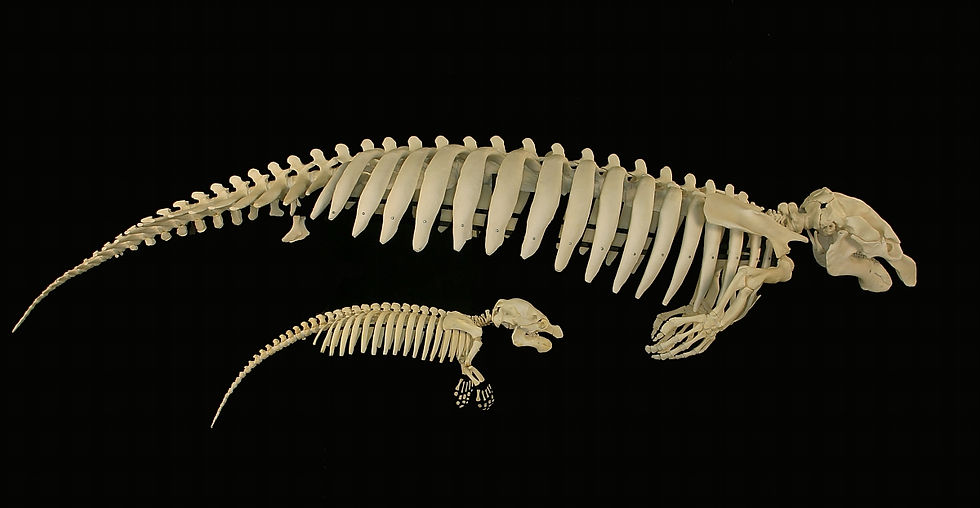
Land-dwelling sirenians slowly evolved smaller and smaller hind limbs until they were no longer visible externally. Internally, today’s manatees still have tiny pelvic bones — a ghostly reminder of their walking past.
2. Their front legs reshaped into flippers
What once were weight-bearing limbs became sturdy, paddle-like flippers perfect for steering in the water. Fun fact: manatees still have fingernail-like structures on their flippers, similar to elephants’ toenails!
3. Their bodies became more streamlined
To move efficiently through water, their bodies elongated and lost excess bulk where it wasn’t needed on land.
4. Their tails transformed into powerful paddles
One of the most unmistakable changes is the manatee’s round, sweeping tail — a tool that powers their calm, gliding motion.
Cousins of Giants: The Elephant Connection
If you’ve ever noticed a manatee’s gentle eyes or their slow, curious nature, you’ve already glimpsed hints of their land-loving heritage.
Manatees and elephants share:
Nails on their limbs/flippers
A similar tooth replacement system (they continuously grow new molars that slide forward as old ones wear down — called “marching molars”)
A preference for plants over anything else
Thick, wrinkled skin (though manatees’ is more streamlined for swimming)
This shared ancestry is why biologists affectionately refer to manatees as the elephants of the sea.

Why Their Past Matters Today
Understanding the manatee’s incredible evolutionary journey reminds us just how adaptable — and vulnerable — these animals are. They’ve survived tens of millions of years of change, yet their biggest challenges now come from modern threats:
Boat strikes
Habitat loss
Declining eelgrass
Water pollution
Cold stress during winter
Knowing where they came from helps us better understand how to protect where they’re going.
At Salty Siren Tours & Charters, we share this story often with our guests because education is conservation. When people learn more about manatees, they fall even more in love with them — and that love inspires action. 💙🌿
From Land to Sea… to Your Next Adventure
Today’s manatees may no longer roam the earth on four legs, but they continue to capture our hearts with their gentle, lumbering grace underwater. Their journey from land-dwellers to the iconic sea cows of Florida is one of evolution’s most fascinating tales — and we’re lucky to witness the latest chapter right here in Crystal River’s warm, spring-fed sanctuaries.
Ready to meet these ancient, gentle giants in person?Book your small-group, eco-conscious tour with Salty Siren Tours today and experience manatee magic like never before. 💙🌊


Comments